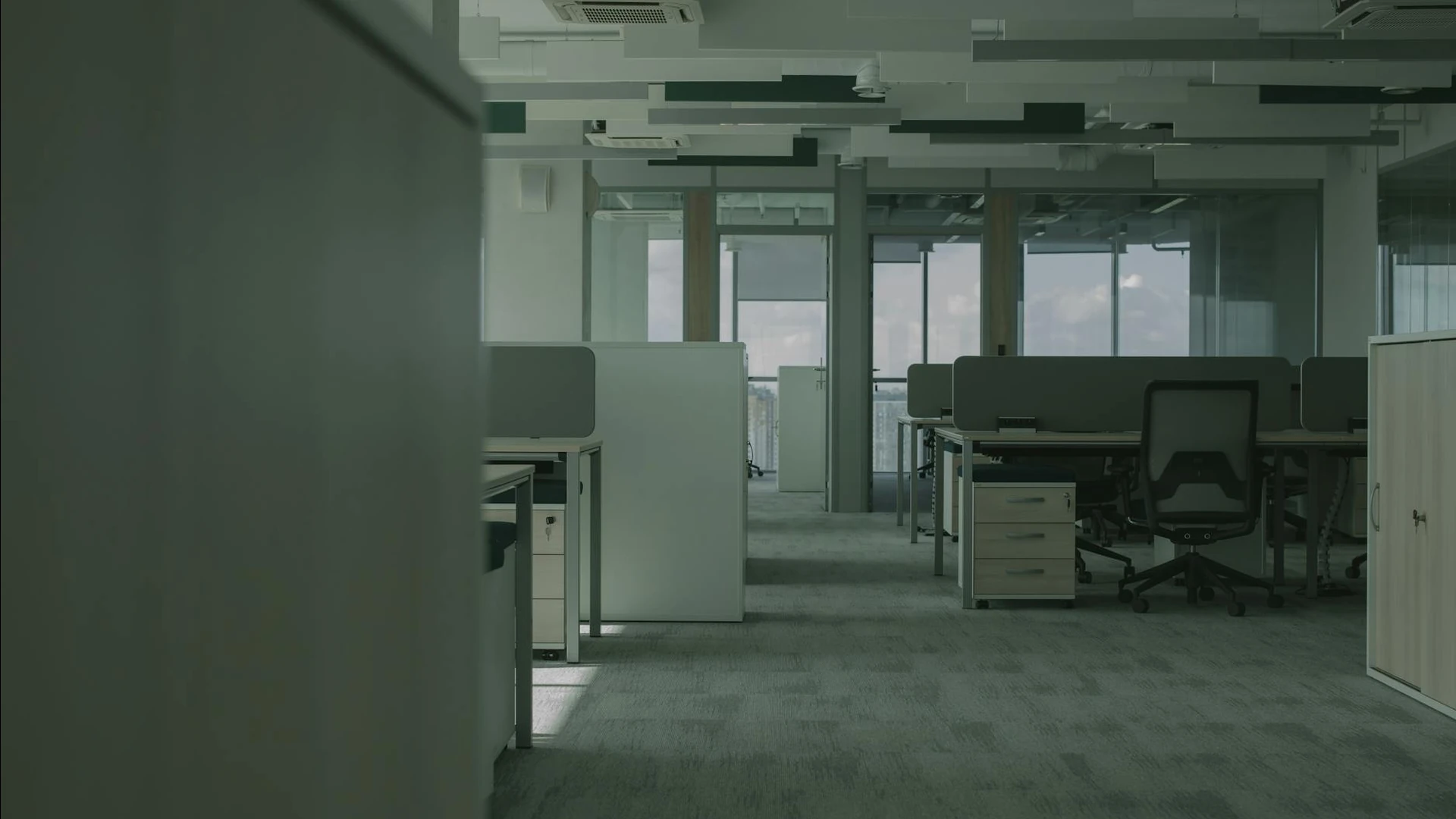
Finding a cockroach in your office is uncomfortable. It raises immediate questions: Is there just one? Are there more hiding somewhere? Is the building infested? Should you tell management?
According to a 2024 survey by Orkin, approximately half of all offices have experienced cockroaches, and 89% of office tenants have seen some type of pest in the past 12 months. This is a common problem, not a rare one.
Key Takeaways
- Half of all offices have experienced cockroaches; 89% of tenants have seen a pest in the past year (Orkin, 2024)
- A single daytime sighting almost always signals an established infestation - the population is large enough to push individuals out into the open
- Foggers and baseboard sprays scatter cockroaches rather than kill them; gel bait applied at actual harboring sites is the professional standard
- Kuwait's year-round indoor temperatures of 24-28°C support continuous reproduction - there is no cold season to suppress populations
Does one cockroach mean you have an infestation?
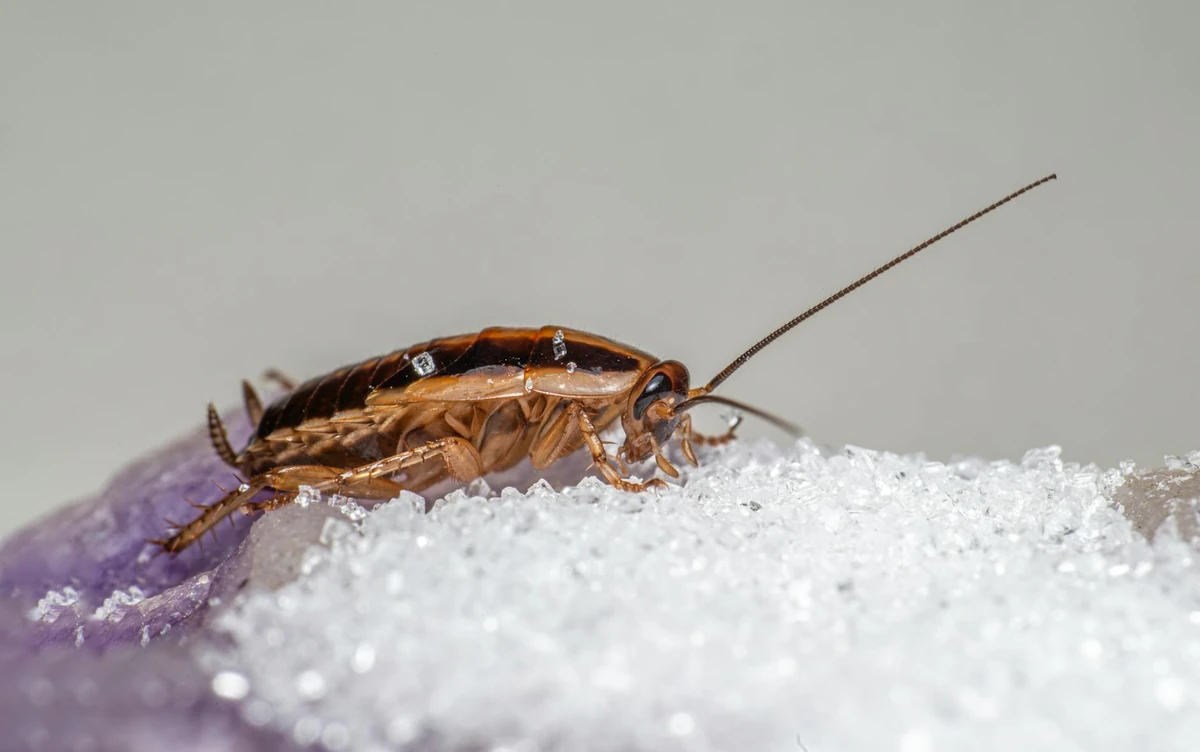
In most cases, yes.
Cockroaches are nocturnal insects. According to 2023 research from the University of Kentucky Department of Entomology, they spend the vast majority of their time hidden in dark, narrow cracks and crevices, emerging at night to forage for food. During the day, they stay out of sight.
That biology matters here: if you see a cockroach during daylight hours in an open area, it is almost certainly not a lone individual. It means the population hiding nearby has grown large enough that competition for food and space is pushing individuals out into the open.
A single nighttime sighting near a trash bin or sink is less alarming. A daytime sighting in a hallway or at a workstation is a clear signal the infestation is already established.
43% of office tenants report a pest issue after a single sighting (Orkin, 2024). That instinct is correct - one visible cockroach is rarely the full picture.
Why offices attract cockroaches in the first place
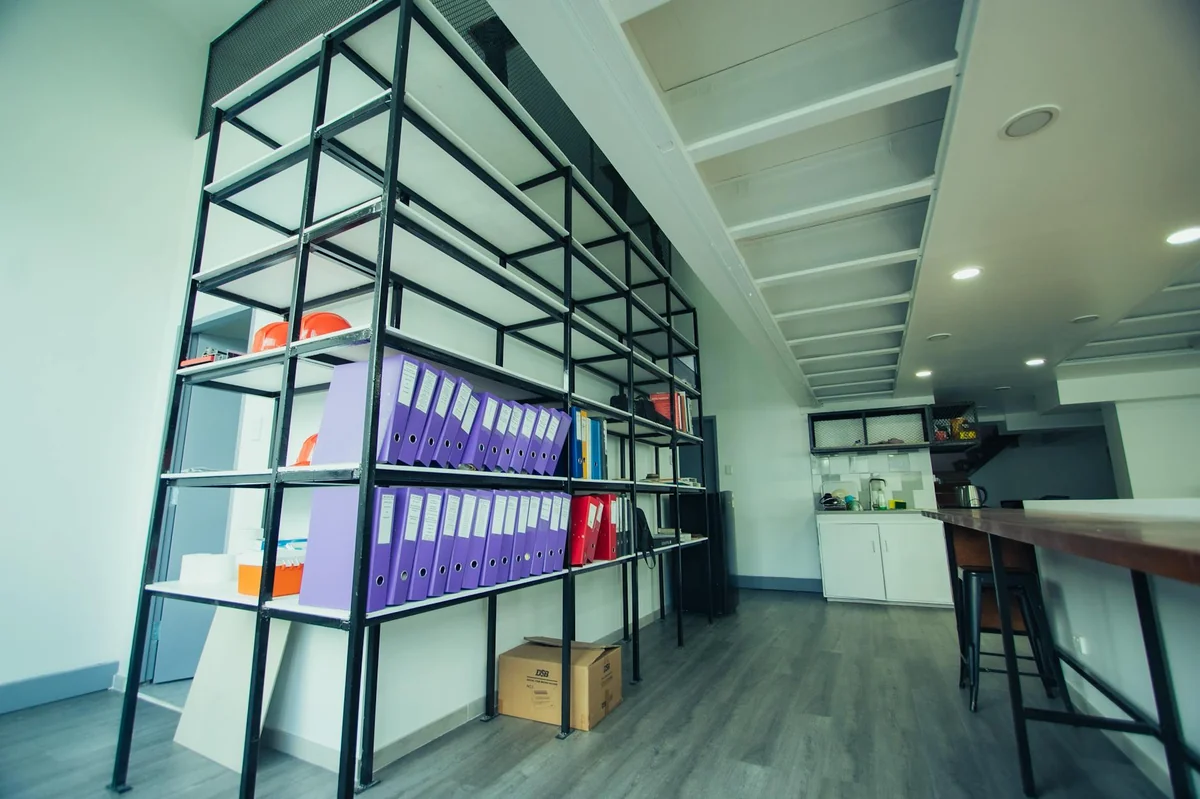
Cockroaches need three things to survive and reproduce: food, water, and warmth. Office buildings provide all three, often without anyone realizing it. That's the whole problem in one sentence.
Food sources in offices are more abundant than they appear. Crumbs under desks, residue on shared kitchen surfaces, food left in desk drawers, coffee grounds near machines, and unsealed snacks in break room cupboards all constitute reliable food supplies. Cockroaches eat soap, toothpaste, glue, hair, and paper - not just the food on the counter - making even well-maintained offices potential feeding grounds (University of Kentucky, 2023).
Water is available through leaking pipes under sinks, condensation around HVAC systems, standing water in drain trays, and moisture that accumulates around refrigerator seals and dishwasher edges.
Warmth is the easiest condition offices satisfy. Air-conditioned commercial buildings in Kuwait maintain temperatures of 24-28°C year-round, which falls squarely within the optimal breeding range for the German cockroach, the most common species found in commercial buildings worldwide.
Even clean offices can become infested. Poor sanitation accelerates infestations, but cleanliness alone does not prevent them. The structural conditions - warmth, water access, and delivery traffic - matter just as much (University of Kentucky, 2023).
Which cockroach species is in your office, and why it matters
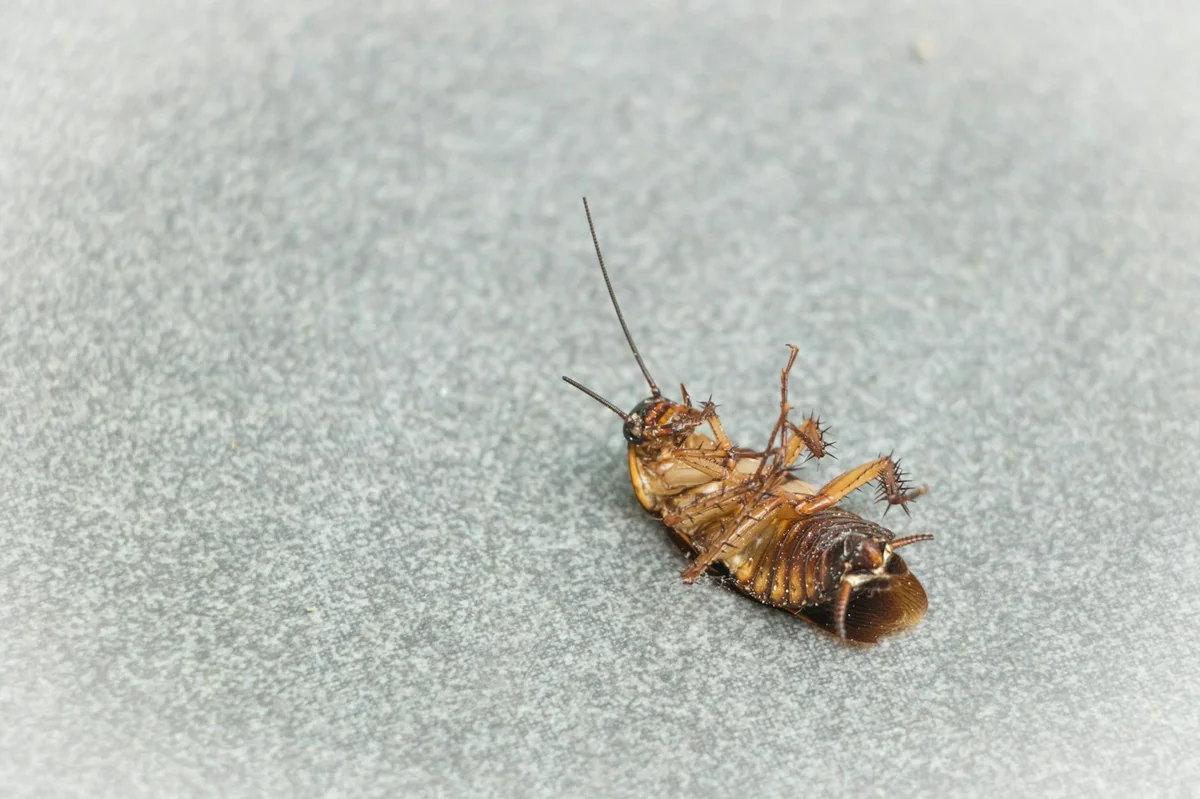
There are several species that commonly infest commercial buildings. Correctly identifying which one you are dealing with directly affects where to look and how treatment should be targeted.
| Species | Size | Primary habitat | Why it matters for treatment |
|---|---|---|---|
| German cockroach | ~1.5 cm | Kitchens, electronics, break rooms | Gel bait in cabinets and cracks; arrives via deliveries |
| American cockroach | ~4 cm | Floor drains, pipe chases, basements | Enter via drainage; need building-wide treatment |
| Oriental cockroach | ~2.5 cm | Sewers, crawl spaces, garbage areas | Filth-associated; source is usually drain infrastructure |
| Brownbanded cockroach | ~1.5 cm | Upper walls, furniture, storage areas | Spreads away from kitchens; easily misidentified |
German cockroach (Blattella germanica) is by far the most common species found inside buildings globally. Adults are approximately half an inch long, light brown, with two dark parallel stripes running behind the head. One critical biological fact: the German cockroach does not occur naturally outdoors. Every German cockroach in your office arrived from somewhere else - carried in on a cardboard box, a bag, or a piece of equipment. They thrive in kitchens, break rooms, and anywhere with food and moisture. They also frequently nest inside heat-producing electronics including toaster ovens, microwaves, and clock radios.
American cockroach (Periplaneta americana) is the largest species commonly found indoors, reaching approximately 1.5 inches in length. Reddish-brown with a pale yellow band around the area behind its head. Unlike the German cockroach, it prefers dark, moist environments: floor drains, sump pumps, pipe chases, boiler rooms, and sewer systems. In multi-story commercial buildings, American cockroaches typically enter through drainage systems and spread upward through plumbing infrastructure.
Oriental cockroach (Blatta orientalis) is shiny black or dark brown and approximately one inch long. It is considered the filthiest of the common species because it feeds primarily on garbage, animal waste, and decaying organic matter. It typically infests areas close to sewers, basements, and crawl spaces.
Brownbanded cockroach (Supella longipalpa) is similar in size to the German cockroach but differs critically in behavior: it does not confine itself to kitchens and bathrooms. It can be found in upper areas of walls and ceilings, behind picture frames, inside furniture, and in storage areas well away from food sources. This makes it significantly harder to locate and treat if misidentified as a German cockroach.
Species identification matters because gel bait placed in break room cabinets will have no effect on a brownbanded cockroach living inside an office cabinet three rooms away, or on American cockroaches coming up through floor drains at night.
Where cockroaches hide in an office - the spots people miss

The instinct when searching for cockroaches is to check the kitchen and break room. That is a reasonable starting point, but it is rarely where the full picture reveals itself.
Based on behavioral research from the University of Kentucky (University of Kentucky, 2023) and field data from CockroachCare (CockroachCare, 2024), commercial office spaces have a distinct set of high-risk harborage zones that are frequently overlooked:
Break room and kitchen areas remain the primary zone for German cockroaches - specifically under and behind refrigerators, inside cabinets, around sink plumbing, near trash bins, and in the gaps between appliances and walls.
Heat-producing electronics are a significant and underappreciated harborage site. German cockroaches are drawn to warmth and nest inside toaster ovens, microwaves, coffee machines, clock radios, and desktop computers. The internal warmth is ideal for egg development.
Server rooms and IT closets offer consistent heat, low foot traffic, and minimal cleaning - near-ideal conditions for undisturbed colony growth.
Cardboard storage areas present a dual problem. Cardboard provides both physical harboring material and a food source, as cockroaches feed on the organic adhesives and paper fibers. Boxes stacked against walls and stored on the floor are particularly high risk.
Floor drains and plumbing penetrations are the primary entry and travel route for American cockroaches moving up from building drainage systems.
Under and behind large furniture that is rarely moved accumulates food debris and offers undisturbed darkness.
AC duct access points and ceiling voids in older or poorly sealed commercial buildings serve as travel corridors between rooms and floors.
The common thread: darkness, warmth, minimal disturbance, and proximity to food or moisture.
How cockroaches got into your office - the entry routes nobody checks

Research from CockroachCare (CockroachCare, 2024) and the University of Kentucky identifies several pathways that are consistently underestimated:
Delivery boxes and packaging are one of the most common introduction routes for the German cockroach - the species that makes up the majority of office infestations (section 3). Cardboard boxes, grocery bags, and beverage cartons arriving at the office may carry live cockroaches or egg cases tucked inside seams and folded edges. A single infested delivery is enough to introduce a population.
Structural gaps allow entry even in apparently well-sealed buildings. Cockroaches pass through gaps as small as 1/16 of an inch - the thickness of a coin. These gaps exist around plumbing penetrations, conduit entry points, cable management holes, door frames, and window edges.
Plumbing and drain infrastructure acts as a highway for American cockroaches in particular. Shared drain lines running vertically through a multi-story building connect floors and units. A colony established in the basement can migrate upward through pipe chases over time.
Secondhand furniture and equipment brought into the office can import established infestations. Egg cases are small, well-concealed, and survive transport.
Neighboring units in shared commercial buildings contribute significantly. Through shared walls, ceiling voids, and utility penetrations, a cockroach population established in an adjacent office or retail unit can spread laterally. In Kuwait's denser commercial districts, where buildings share walls and common infrastructure, this lateral spread is a common and documented scenario.
Employee bags and personal items are a documented introduction route, particularly for German cockroaches. Personal bags stored on the floor or in shared storage rooms can pick up cockroaches at one location and introduce them to another.
In Kuwait's commercial buildings - particularly older multi-tenant blocks in Farwaniya and Shuwaikh - delivery areas and loading docks are consistently where infestations trace back to. Cardboard sits uninspected long enough for a population to establish before anyone notices.
Seven signs your office has a cockroach problem - beyond seeing one
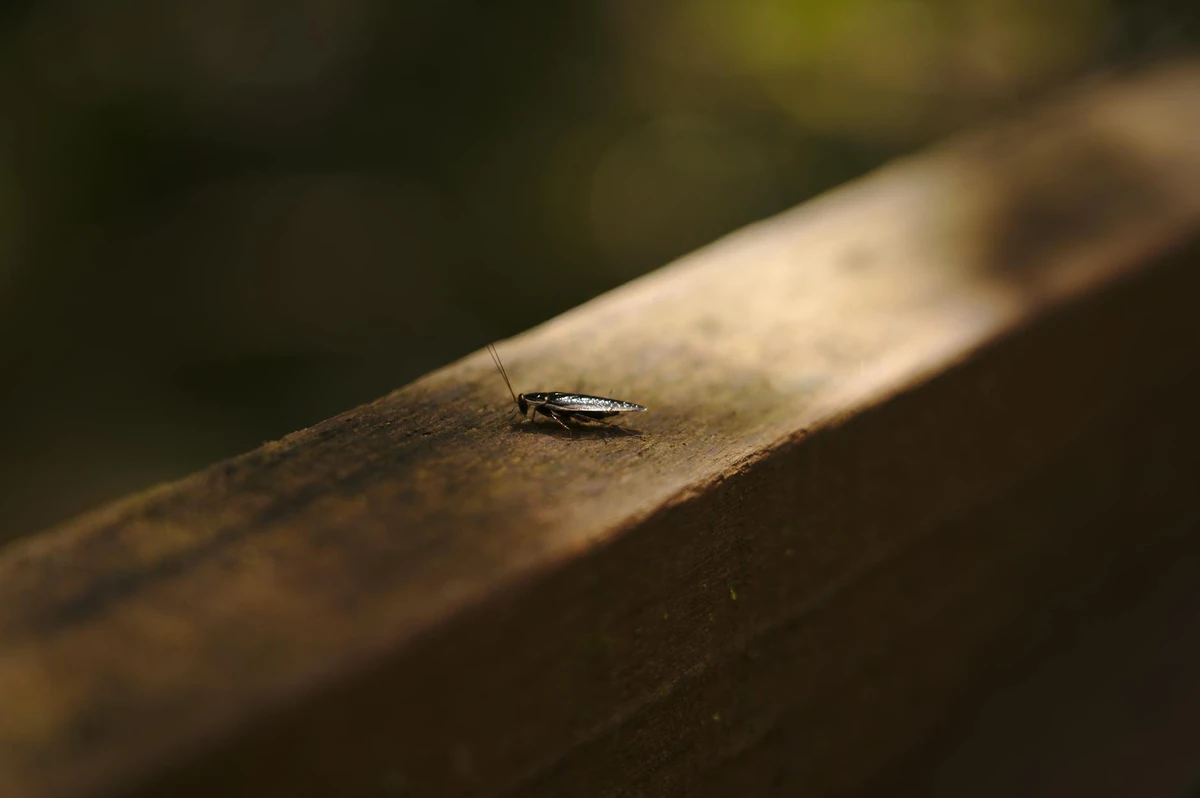
Because cockroaches are nocturnal, most infestations are detectable through secondary evidence long before the insects themselves are seen regularly.
Droppings are the most consistent sign. German cockroach droppings resemble black pepper or coffee grounds and appear in concentrated areas near harboring sites: inside cabinet corners, along the back edges of shelves, in the gap between appliances and walls. Purdue University's entomology extension (Purdue University, 2023) notes that cockroaches congregate in response to aggregating pheromones in their feces - droppings mark the location of the colony itself, not just random travel paths.
Beyond droppings, look for smear marks along walls and floors near drains - American cockroaches leave irregular dark streaks from their bodies as they travel through high-moisture areas. A musty, oily odor is another signal; it comes from the pheromones cockroaches use to communicate and is distinctive in heavily infested spaces, though in lighter infestations it may only be noticeable inside cabinets or enclosed storage.
Shed skins (exuviae) left behind each time a nymph molts. German cockroach nymphs shed their skin five to six times before reaching adulthood. Finding shed skins indicates the population is actively developing, not merely surviving.
Egg cases (oothecae) are small, brown, bean-shaped capsules. Each German cockroach egg case contains up to 40 eggs. Finding one means the population is actively reproducing in that exact location - not just passing through. Small irregular holes chewed in paper, cardboard, or fabric point to the same conclusion: heavy activity in a space.
Unexplained allergy or asthma symptoms in staff are a less obvious but real indicator. The National Center for Healthy Housing (NCHH, 2024) documents that cockroach debris - shed skins, saliva, body fragments, and droppings - aerosolizes and becomes airborne. Employees experiencing increased respiratory symptoms in specific rooms may be reacting to cockroach allergens. Worth investigating before blaming air conditioning or seasonal dust.
What cockroaches actually spread - the health risks for your staff
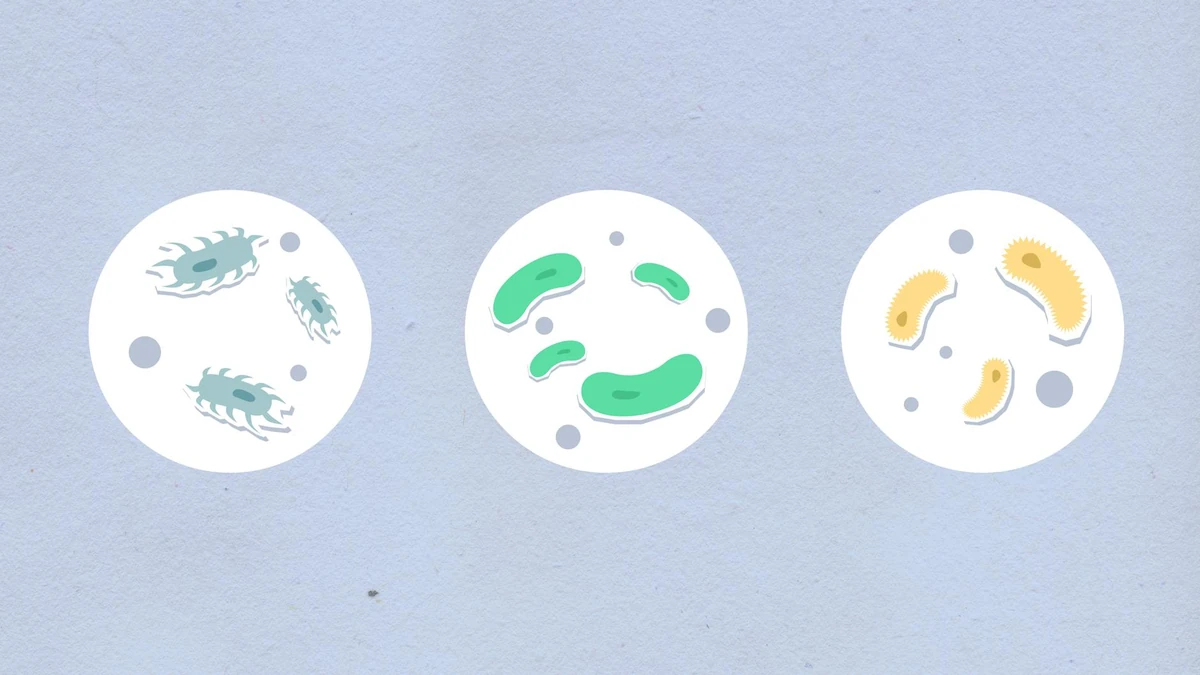
The health consequences of a cockroach infestation go well beyond the discomfort of seeing one.
Cockroaches carry over 33 species of bacteria, including E. coli and Salmonella (Orkin, 2024). These bacteria are transferred when cockroaches move across food preparation surfaces, utensils, and food itself - a direct risk in office kitchens and break rooms.
Beyond direct bacterial transfer, cockroach allergens present an ongoing airborne health risk. The National Center for Healthy Housing (NCHH, 2024) documents that cockroach debris aerosolizes in infested spaces. In individuals with sensitivity, this triggers immune responses confirmed by specific IgE sensitization. The clinical outcomes include chronic respiratory distress, congestion, sneezing, and asthma attacks. Prolonged exposure worsens outcomes over time.
Cockroach-triggered asthma is particularly well-documented in densely populated buildings - the same conditions present in multi-tenant commercial office buildings (University of Kentucky, 2023).
One often-overlooked risk: some traditional pest control methods introduce their own hazards. The National Center for Healthy Housing specifically identifies certain pesticide sprays and fogs as capable of triggering asthma attacks. For offices with staff who have respiratory sensitivities, the treatment approach matters as much as the infestation itself. Professional disinfection services can address residual airborne contamination after treatment is complete.
Can you bring cockroaches home from work?
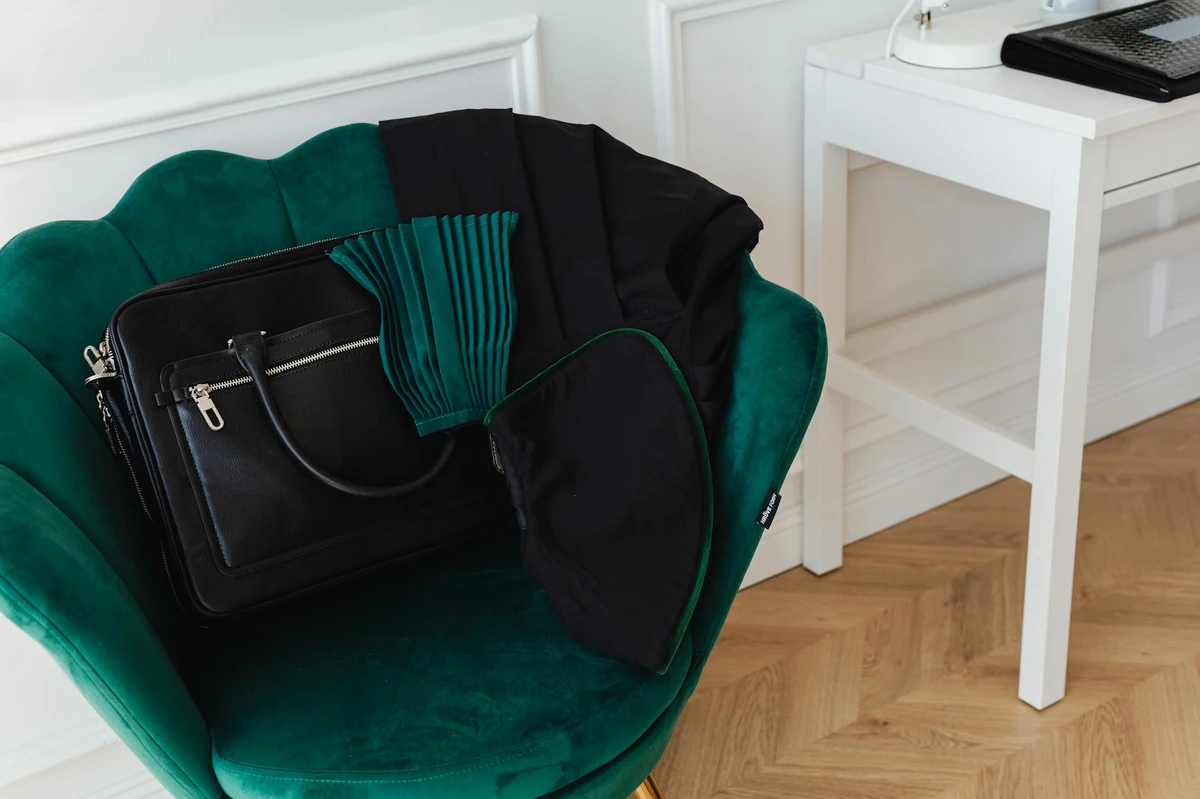
Yes. The mechanism is straightforward.
Cockroaches do not cling to people the way some parasites do. They don't live on human bodies. But they hide in dark, enclosed spaces - and personal bags, clothing, and work equipment provide exactly those conditions.
The specific hiding points to watch are folds and seams. Interior bag seams, folded edges of clothing stored in lockers or under desks, laptop bags, and reusable lunch bags are all spaces where a small German cockroach nymph can hide undetected.
Pest management guidance from A1 Pest (A1 Pest, 2023) suggests these practical measures for employees in or near an infested space:
- Check and shake clothing, bags, and shoes before leaving the office, paying attention to folds, seams, and pockets.
- Store personal items such as handbags and jackets in sealed bags or closed containers during the workday rather than leaving them open on the floor.
- When arriving home, wipe down items that were in the office - laptop bags, lunch containers, equipment - with a disinfectant cloth before bringing them inside.
German cockroaches are exclusively indoor insects with no outdoor population. Every cockroach in a home arrived from somewhere. A workplace is a plausible and documented origin.
The biology behind a sudden cockroach explosion
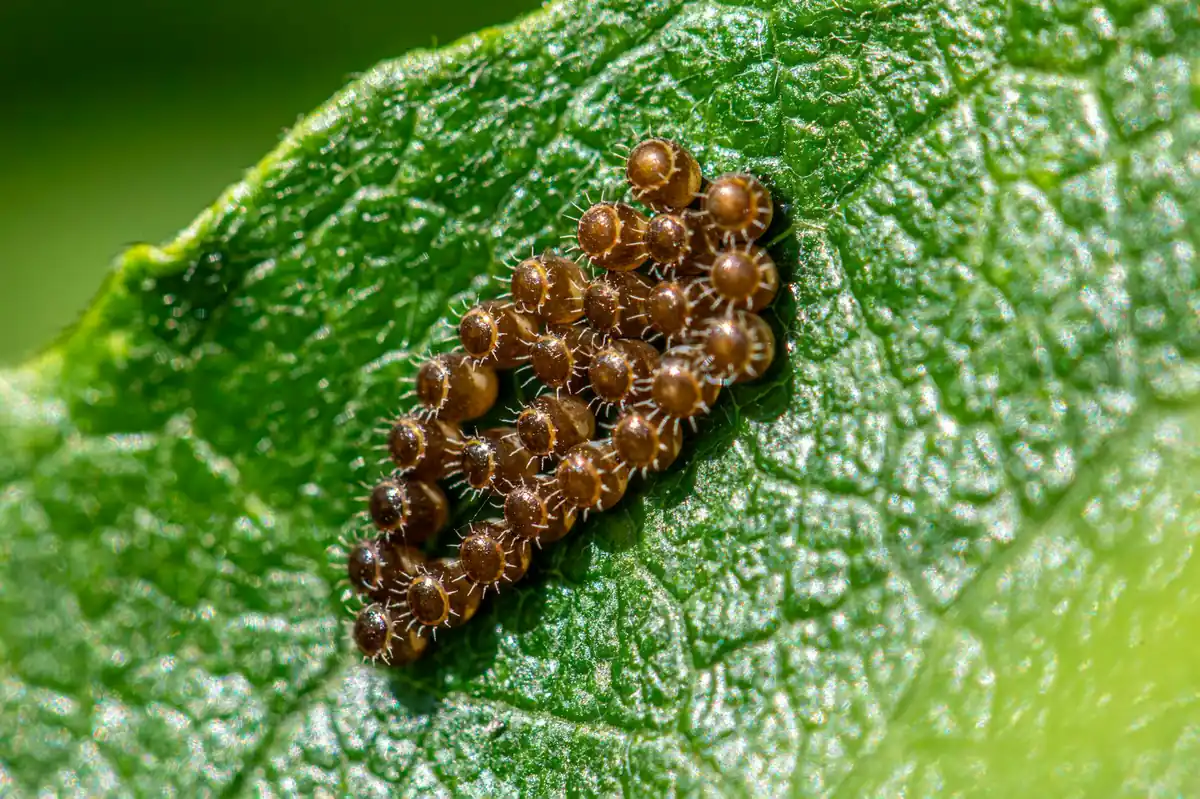
One of the most disorienting aspects of discovering an infestation is how sudden it seems. Months of apparent quiet, then cockroaches visible in multiple areas at once. The reproductive biology explains this.
Purdue University's 2023 entomology extension research states that each adult female German cockroach produces four to eight egg capsules during her lifetime. Each capsule contains 30 to 48 eggs. Development time from egg to mature adult ranges from 40 to 125 days depending on temperature. An adult can live for up to a year.
A single mated female is capable of producing several thousand offspring in less than a year (University of Kentucky, 2023).
A small founding population - introduced through a delivery box, the same pathway described in section 5 - can remain invisible for weeks or months in hidden harborage areas until food competition pushes individuals into visible spaces.
In Kuwait's climate, this process is accelerated. Outdoor temperatures in summer routinely reach 45-47°C, driving cockroaches indoors in large numbers. Kuwait's air-conditioned commercial buildings maintain interior temperatures of 24-28°C year-round - within the optimal range for German cockroach development (CockroachCare, 2024). There is no cold season to suppress populations, unlike temperate climates where winter provides a natural reset.
How cockroaches spread through an entire building
A cockroach infestation is rarely confined to a single office or floor for long.
German cockroaches regularly travel between rooms and adjoining units through shared walls, ceiling voids, pipe runs, wiring conduits, and other structural penetrations. American cockroaches use building drainage systems to move vertically through multi-story structures (University of Kentucky, 2023).
The specific conduits include: unsealed plumbing penetrations, utility lines, drain channels, loading dock access points, and shared HVAC infrastructure - all of which function as travel corridors across a building.
Effective cockroach control in any multi-unit building requires a building-wide approach, not a unit-by-unit one. Treating a single office while neighboring units remain untreated creates a cycle where the treated space is simply reinfested from adjacent sources (Purdue University, 2023).
Approximately half of all offices have experienced cockroaches, and mid-size to large companies are significantly more likely to have encountered them than small ones (Orkin, 2024). Larger buildings have more entry points, more shared infrastructure, and higher delivery traffic. More surface area for the problem to hide.
In Kuwait, this building-level dynamic is particularly acute in areas such as Shuwaikh Industrial, Farwaniya, and Fahaheel, where multi-tenant commercial buildings often share walls, drainage systems, and loading infrastructure.
Employer obligations - what a pest infestation means for your business

Beyond health and operational disruption, a cockroach infestation carries real business and regulatory consequences. For context on the full commercial cleaning picture, office cleaning services are often the first line of defense before pest issues escalate.
In Kuwait, commercial food businesses - restaurants, cafeterias, food processing facilities, and any establishment handling or serving food - are subject to inspection by the Kuwait Municipality's public health division and the Public Authority for Food and Nutrition (PAFN). Pest evidence constitutes a hygiene violation during inspection. Depending on severity and repeat occurrence, consequences can include mandatory remediation, operational suspension, or closure.
Non-food businesses are not subject to the same specific regulations, but employer duty-of-care obligations apply. A documented infestation that results in staff health impacts creates liability exposure.
The business consequences are quantifiable (Orkin, 2024):
- 50% of office tenants said recurring pest issues would cause them to look for new office space.
- 9 out of 10 told someone about a pest sighting, and 75% of those told more than one person.
- 25% posted about the encounter on social media.
- 54% felt building management had an opportunity to be more responsive to pest-related complaints.
A single sighting reported by one employee reaches multiple people within hours. For client-facing offices, restaurants, and hospitality businesses, the reputational consequences extend well beyond the immediate operational disruption.
What actually works - and what most offices get wrong
Most common office pest control approaches do not work. Ineffective treatment not only fails to solve the problem - in some cases, it makes things worse.
Foggers do not work for cockroaches. Total-release foggers disperse insecticide upward and outward, where it settles on open surfaces. It does not penetrate the cracks and voids where cockroaches actually live and breed. More critically, the active ingredients in foggers are repellent to cockroaches - they scatter the population deeper into wall voids rather than eliminating it (University of Kentucky, 2023). This is why a building can fog on Friday and see cockroaches again by Wednesday.
Spraying baseboards is largely ineffective. Cockroaches spend very little time on open surfaces. Applying insecticide along baseboards treats areas where cockroaches rarely linger long enough to receive a lethal dose.
Gel bait is the professional standard for German cockroach control. Applied in small, pea-sized placements directly into the cracks and harboring areas identified in section 4 - not in open spaces. The bait contains a slow-acting insecticide; cockroaches typically die within one to three days of consumption. Cockroaches that return to the colony before dying deposit toxicant in their feces and secretions, which other colony members then consume. This secondary kill effect reaches individuals that never directly contacted the bait.
Boric acid dust, applied in dry, hidden locations behind appliances and along wall-floor junctions, provides long-term residual control. It works physically - cockroaches ingest it while grooming particles from their bodies.
Integrated Pest Management (IPM) combines targeted treatment with physical exclusion and sanitation. A properly implemented IPM program - gel bait, exclusion (sealing gaps and penetrations), moisture control, and staff education - produces a 75-80% reduction in cockroach populations within six to twelve months (CockroachCare, 2024). IPM addresses the conditions that allow infestations to persist, not only the insects currently present.
DIY gel bait can handle early-stage, localized infestations. Established infestations across multiple areas, multiple species, or recurring infestations that return after treatment all indicate the harboring sites and entry routes have not been fully mapped.
Why cockroaches keep coming back after treatment

Treating a cockroach problem, seeing it resolve, and watching it return weeks later is one of the most common patterns in commercial pest control. There are specific reasons this happens.
Missed harboring sites are the most common cause. Treatment addresses the obvious areas - break room, kitchen - but misses server rooms, cardboard storage, or electronics (section 4). The untreated colony continues to develop and repopulates the treated areas.
Incomplete building treatment is the second. A cockroach population in a neighboring office, shared utility space, or building drainage system will recolonize a treated area if the broader building is not addressed. This is why the building-wide approach described in section 10 matters in practice, not just in theory.
The other two causes are related. Ongoing entry points mean that even a successfully eliminated population returns if the original pathways remain open - an unsealed pipe penetration, uninspected deliveries, or an untreated neighboring unit. And if sprays were used instead of gel bait, chemical repellency has likely scattered rather than killed the population; insects retreat into deeper voids, wait for treated surfaces to lose efficacy, and return.
The solution is not more of the same treatment - it is a more thorough assessment of where the population lives, what conditions sustain it, and what pathways allow reintroduction. Structural exclusion combined with targeted gel bait at actual harboring sites creates durable control. A professional deep clean alongside pest treatment also removes the food debris and organic matter that sustains a population between treatment cycles.
If your office is past the point where internal measures are sufficient, Clean Al Kuwait provides professional commercial pest control across Kuwait. Our team identifies the full scope of the infestation, targets treatment at actual harboring sites, and addresses the structural conditions that allow cockroaches to persist. Contact us for an assessment.
Frequently asked questions
Almost certainly. Cockroaches are nocturnal and stay hidden during the day. A daytime sighting in an open area means the population is large enough that food competition is forcing individuals out of their harboring sites. A 2024 Orkin survey found that 43% of office tenants report a full pest issue after a single sighting.
The German cockroach (Blattella germanica) is the most common species in commercial buildings globally, and Kuwait offices are no exception. It arrives exclusively via human transport - cardboard deliveries, bags, secondhand equipment - because it has no outdoor population. Identifying the species matters because it requires different treatment placement than other species.
Yes. Cockroaches carry over 33 species of bacteria, including E. coli and Salmonella. Their shed skins, droppings, and saliva also aerosolize and trigger allergic and asthmatic responses in sensitive individuals. The National Center for Healthy Housing documents this as an ongoing airborne health risk in infested spaces.
American cockroaches travel vertically through shared plumbing and drain infrastructure. German cockroaches arrive via deliveries and employee bags - they don't need ground-level access. Structural gaps as small as 1/16 of an inch around cable runs and plumbing penetrations allow entry at any floor.
Because the harboring sites or entry routes were not fully addressed. Foggers and sprays scatter cockroaches rather than eliminating them, and a neighboring unit or unsealed pipe penetration will reintroduce the population. Gel bait placed at actual harborage locations, combined with structural exclusion, is what creates durable control. --- Sources: Orkin Office Industry Insights (2024, accessed 2026-05-28), University of Kentucky Entomology EF-614 (2023, accessed 2026-05-28), Purdue University Extension E-241 (2023, accessed 2026-05-28), National Center for Healthy Housing (2024, accessed 2026-05-28), CockroachCare (2024, accessed 2026-05-28), A1 Pest Weed (2023, accessed 2026-05-28)
Ready for a pest-free workplace?
Clean Al Kuwait provides professional pest control across Kuwait. Contact us for a free assessment.